Past Productions
2026

2025
2024
TOP TEN
Recommended
“…it’s a kind of anti-war play, a theme-and-variation on The Trojan Women, a tragedy employing chorales, poeticism, and a three-part structure to excavate the many permeations of grief.
Its anchor is a married American couple, Bill and Madeline (Scott Harris and Libby Baker), who have grown estranged losing their 20-year-old son, their only child, who was on Flight 103, on the seat over the bomb, returning home for Christmas on a break from his studies in London. Seven years after the cataclysm, the couple has decided to visit Lockerbie for a vigil. Madeline’s grief emerges as primal; the play opens with her wandering the fields of Lockerbie, semi-crazed, searching for any shred of evidence about her son. Her despair is like that of an ancient Greek Fury, while Bill attempts in vain to return her to her senses, for which she lashes out at him with contempt. He suffers no less than she but exhibits a coping mechanism that would seem, at first glance, to be more rational — certainly more self-contained. And this duality, over the processing of grief, is one of many in a play that traffics in dualities.
“Death is a visitor who pops in and he’s gone. Grief is a guest who stays too long.”
The couple’s sometimes explosive agony is mediated by a local host named Olive (director and lighting/sound designer Christina Harris), who is grappling with her own loss from the incident.
At stake is the issue of the victims’ clothes that have been gathered and stored — clothes that have become toxic from the stains of blood and body parts. The American government, represented locally by George Jones (Michael Klug), has ordered the clothes burned, while the locals — the women of Lockerbie, a kind of expansive Greek chorus led by a local firebrand/cleaning woman (Vanessa Mizzone) — are lobbying to wash (purify) the clothes and return them to the victims’ families — another duality in this exploration of how to cope with grief.
Harris’s production is set on an almost bare stage, broken by a single set piece of wide steps. For the rest, she relies on her very capable ensemble (which also includes Nicole Erb, Luca Nicoletti, Donna Jo Thorndale, and Suzanne Voss); the musicality of the dialogue, punctuated by phrases spoken/sung in unison and sometimes accompanied by mood-enhancing orchestrations; and washes of atmospheric stage lighting made more vivid by fog effects.
There is a smattering of bromides (“Hatred is love that’s been injured”) — not entirely persuasive in light of American voting rights currently being pummeled, and domestic bigotry in general, but Sonder Theatre Company’s production is also as deeply moving as it is probing.
-Steven Leigh Morris (STAGE RAW)
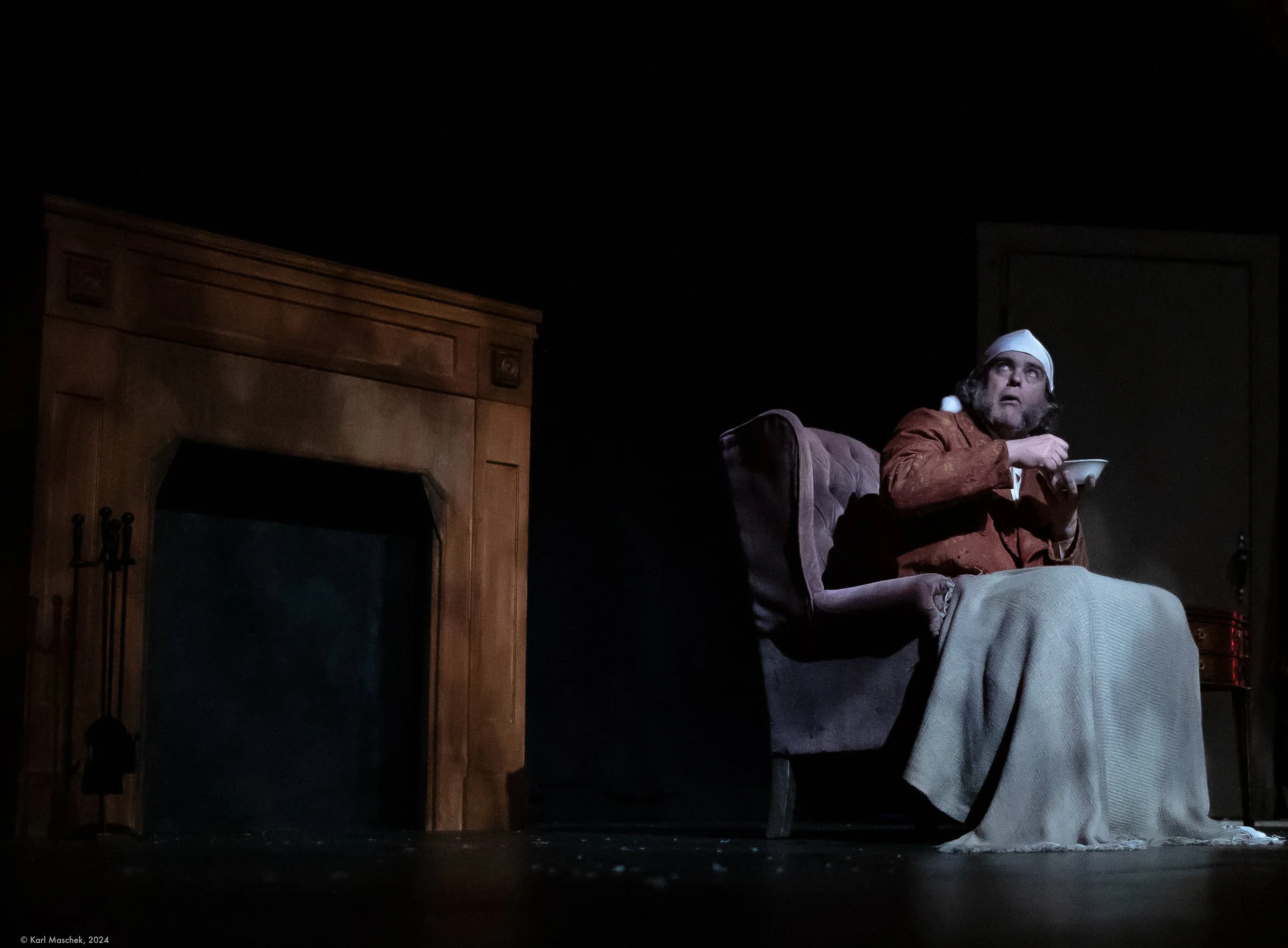
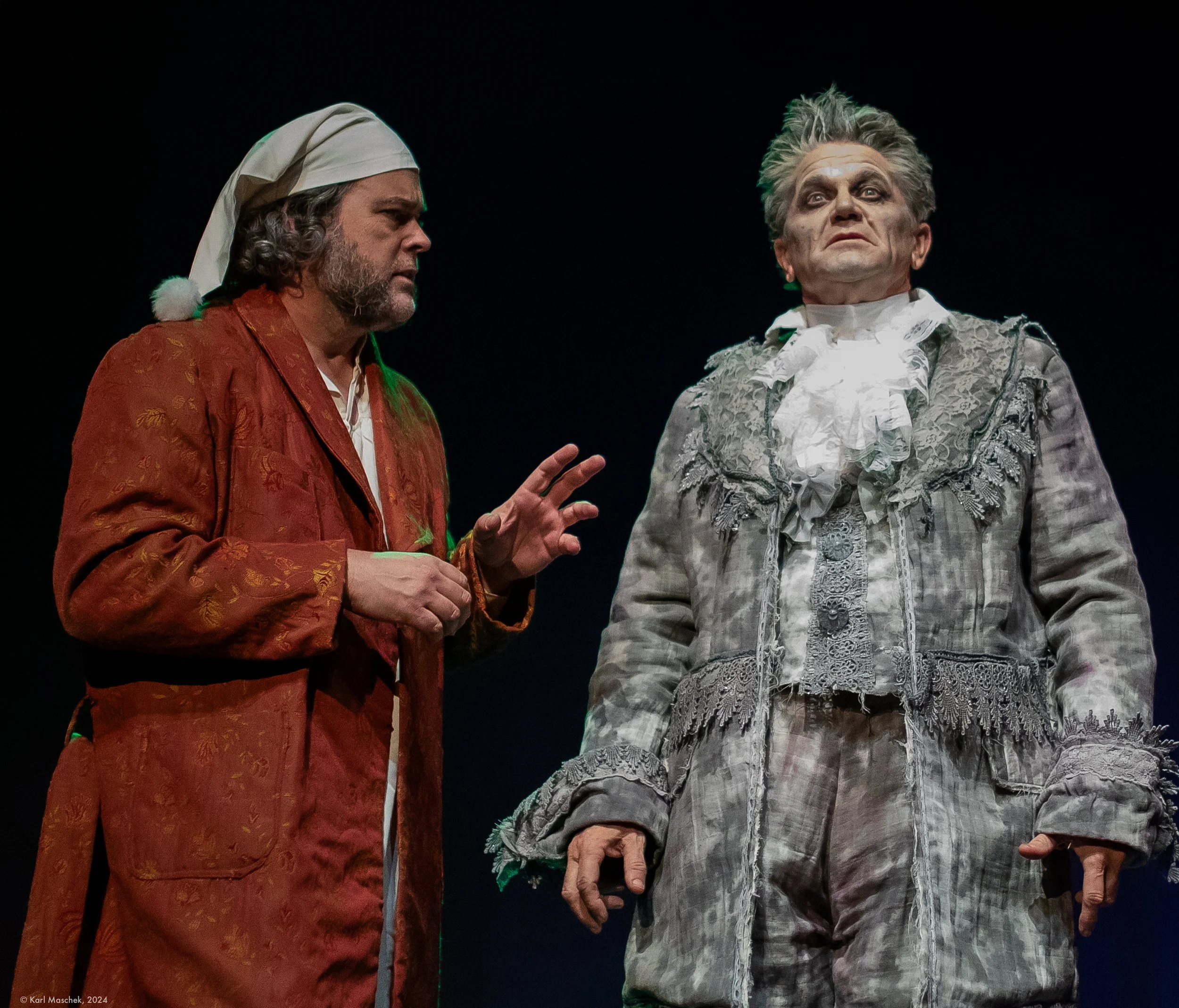
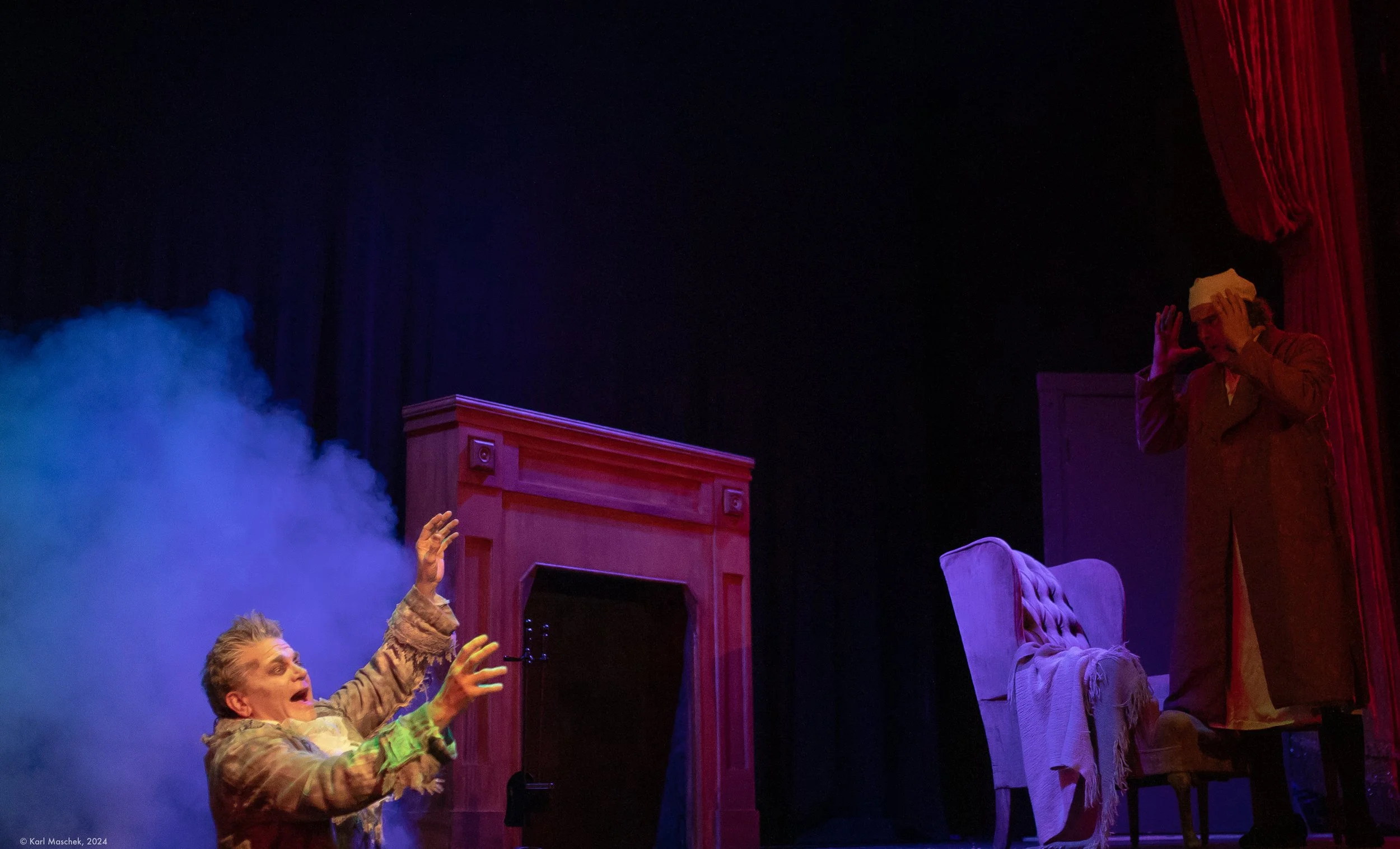
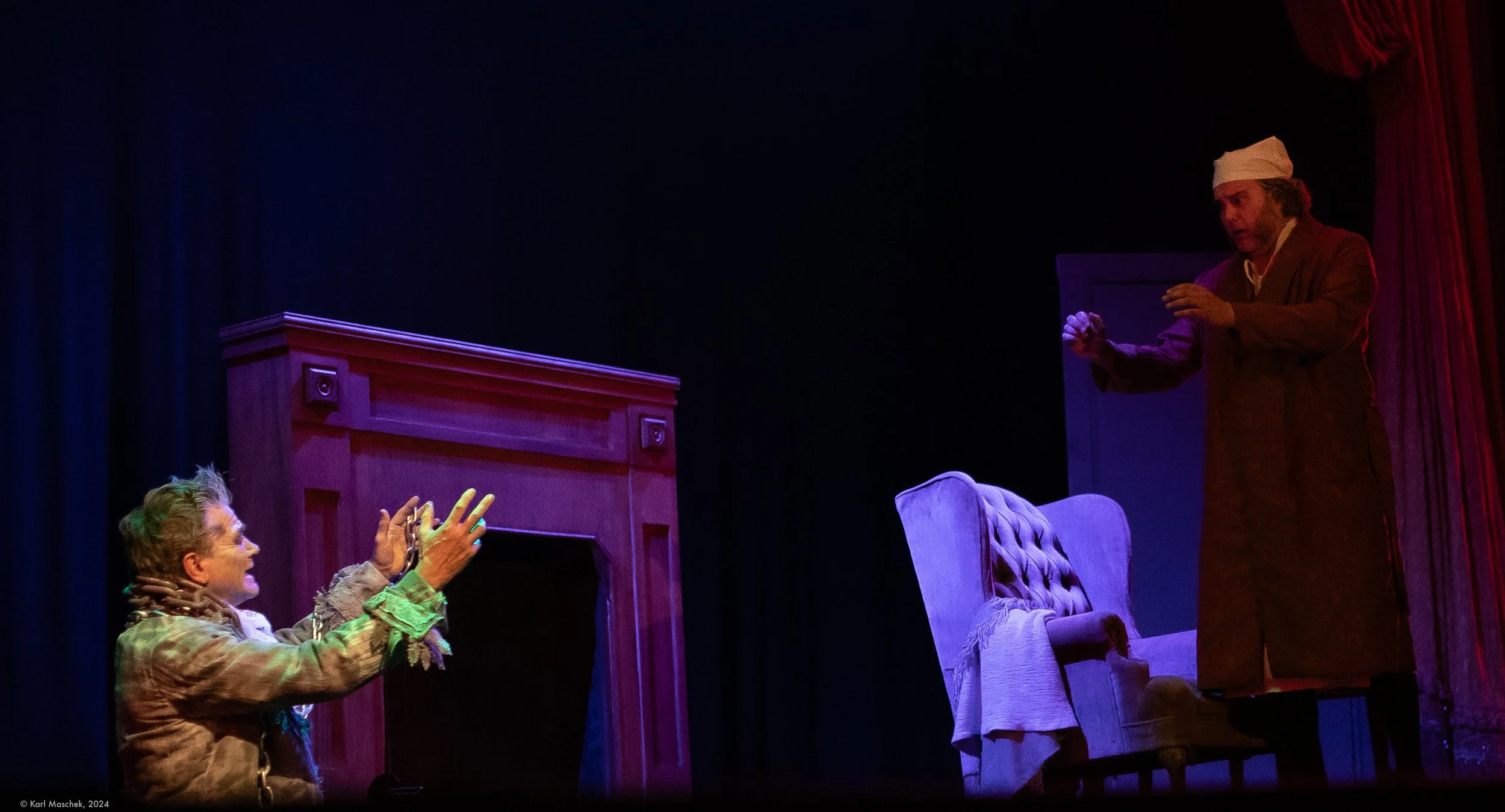
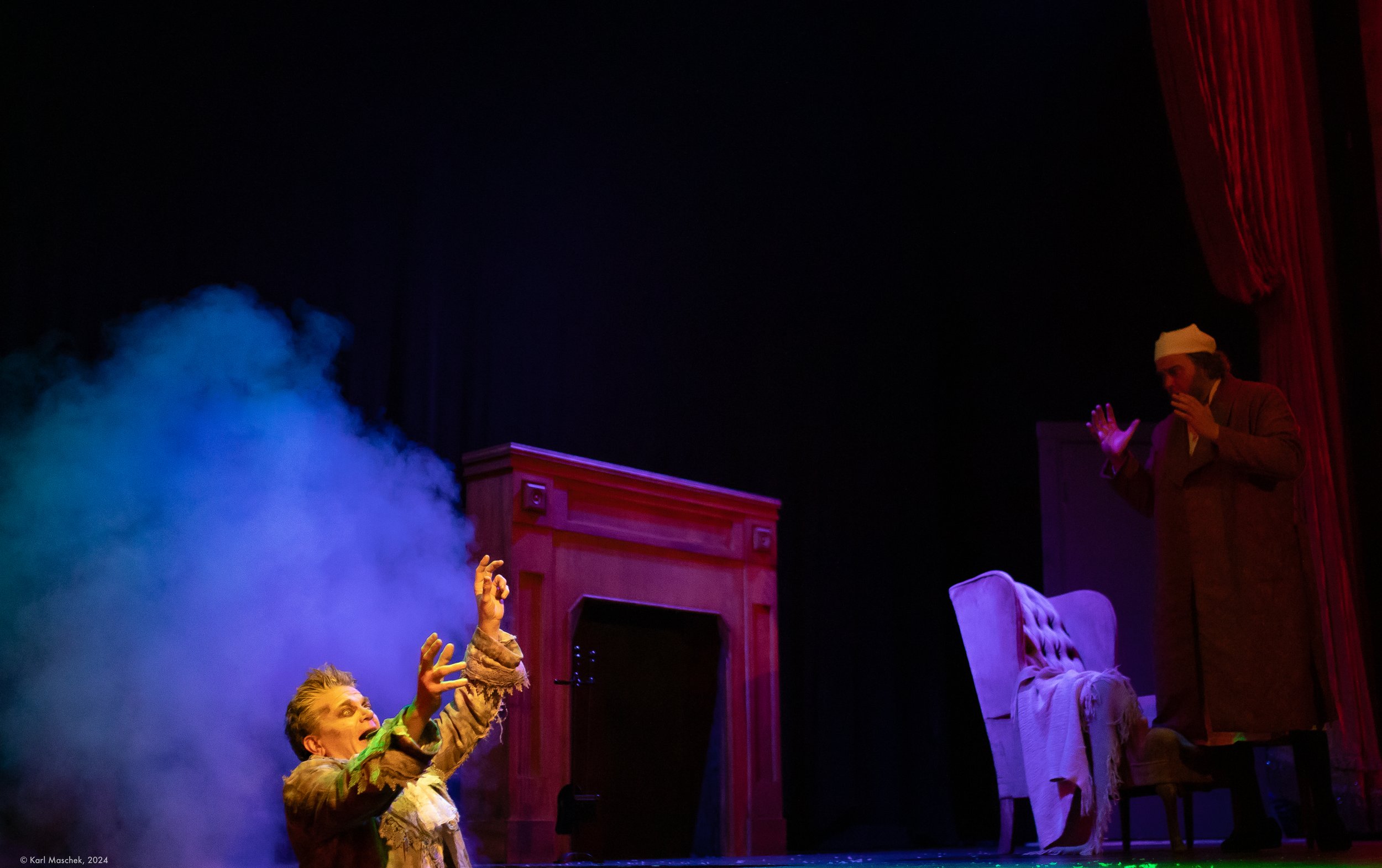
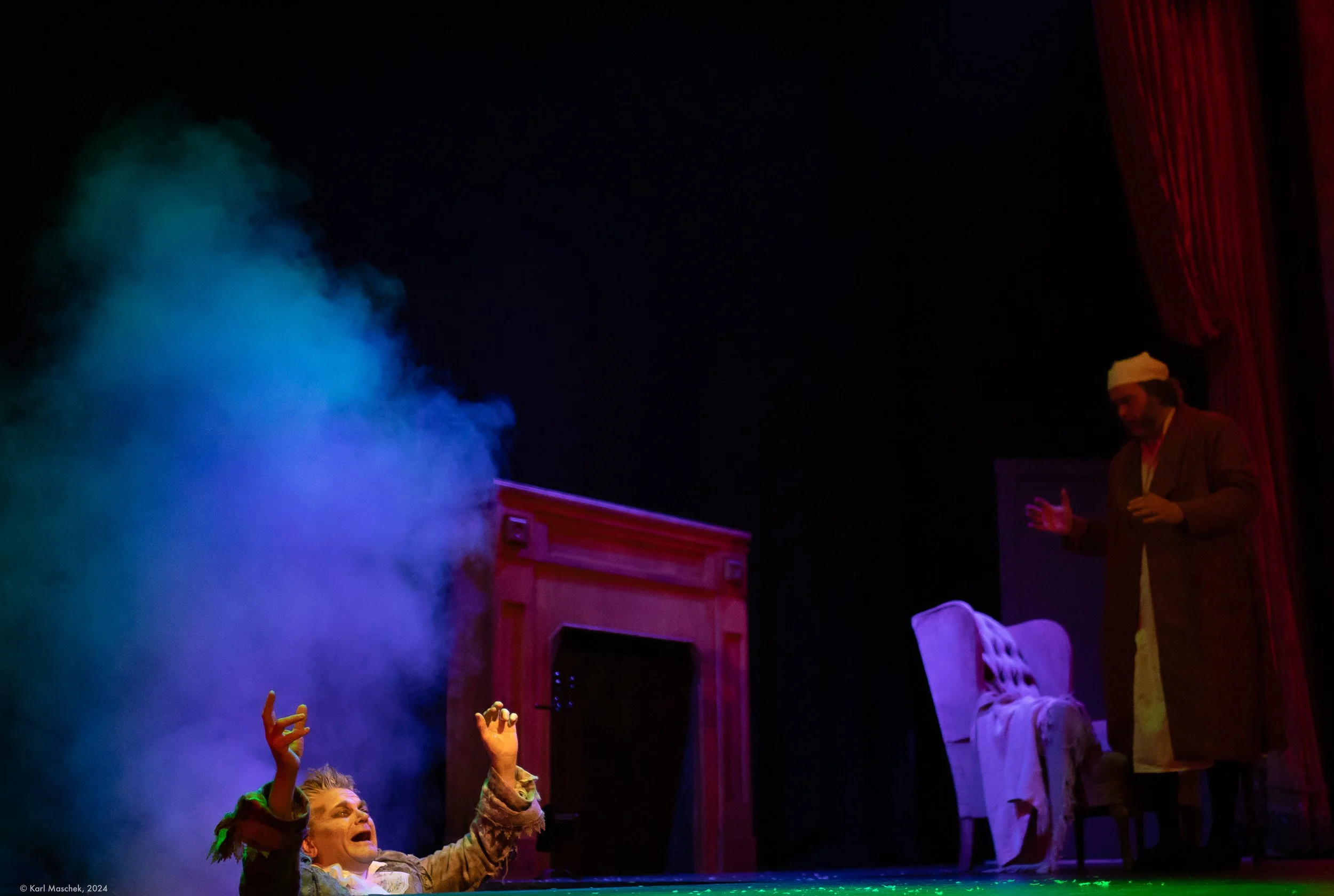
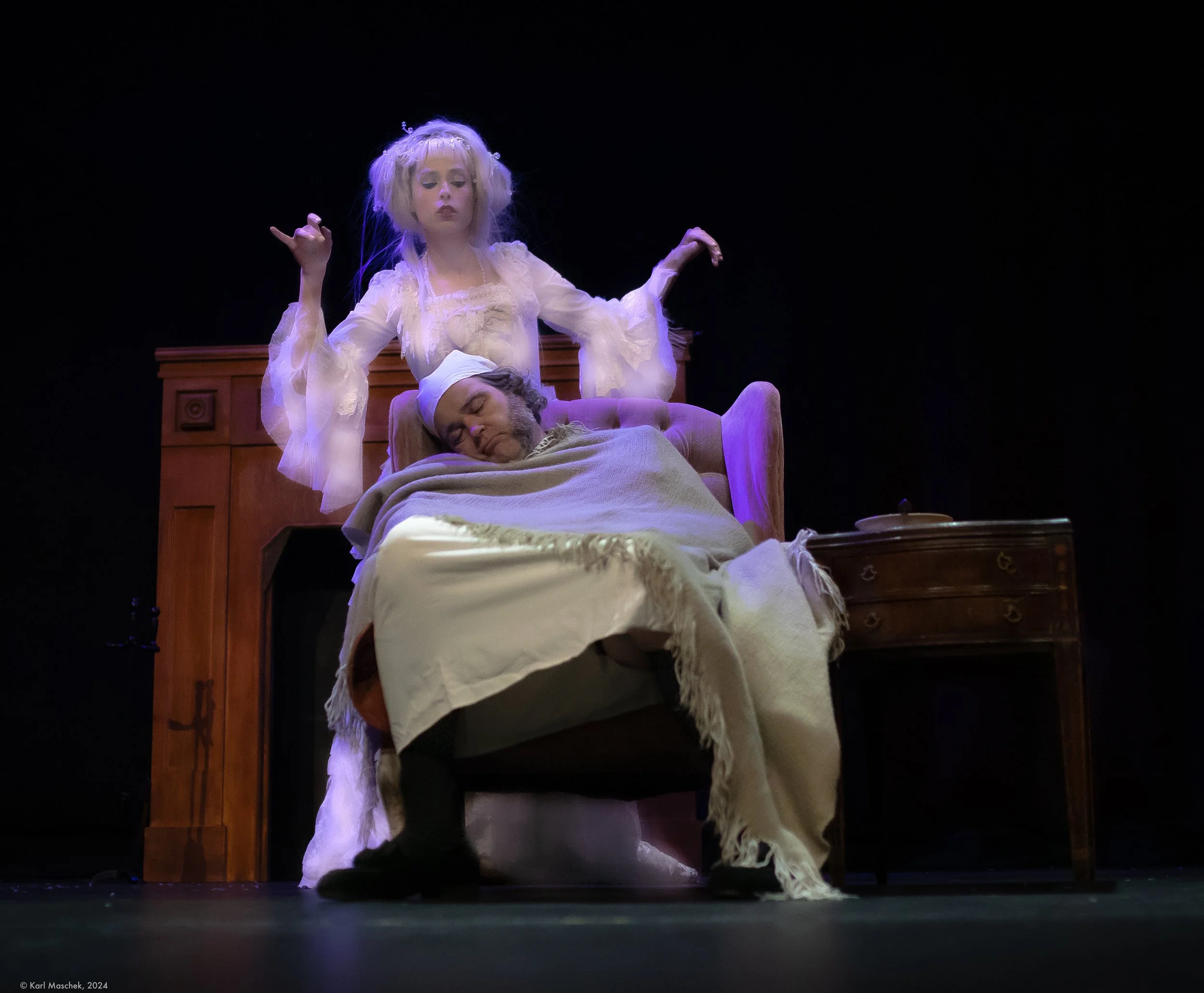
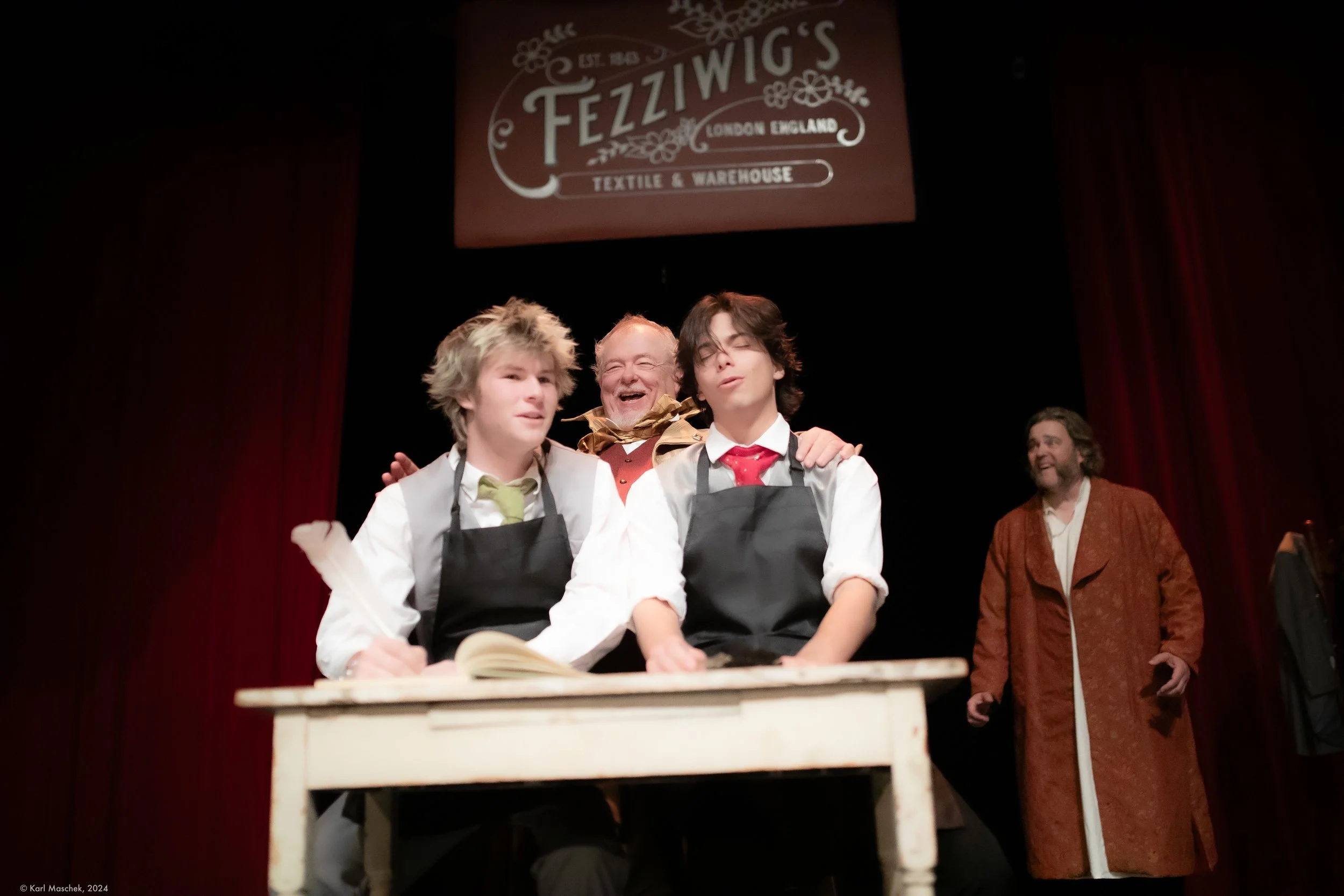
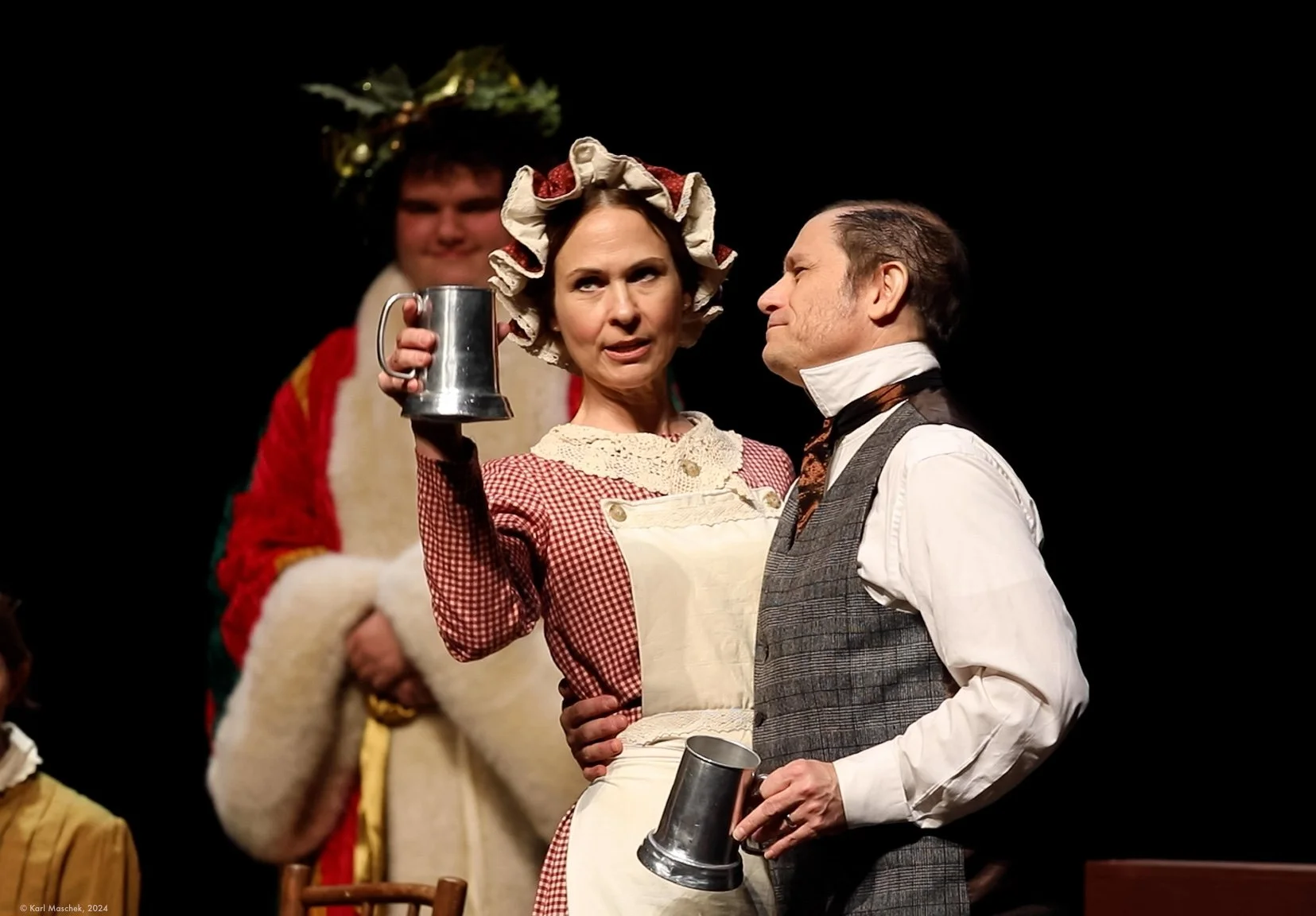
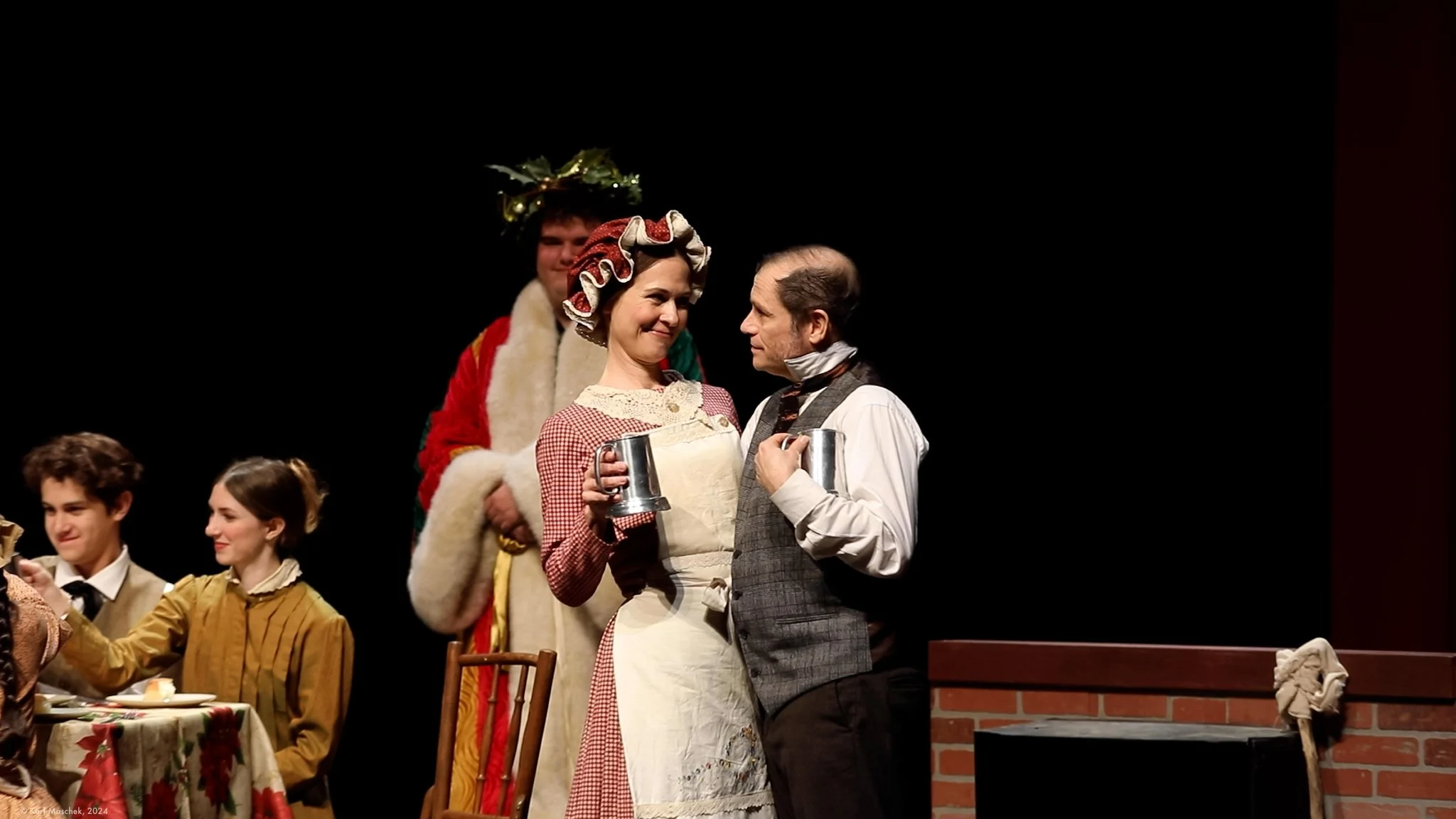
“A CHRISTMAS FEAST!”
I have endeavoured in this Ghostly little book, to raise the Ghost of an Idea, which shall not put my readers out of humour with themselves, with each other, with the season, or with me. May it haunt their houses pleasantly, and no one wish to lay it.
Their faithful Friend and Servant, C.D.
December, 1843.
Charles Dickens came to know the pains and humiliations of poverty at the age of 12, working in a shoe polish factory while his father was in Debtors’ Prison. His education ended abruptly, as his family was evicted from their home.
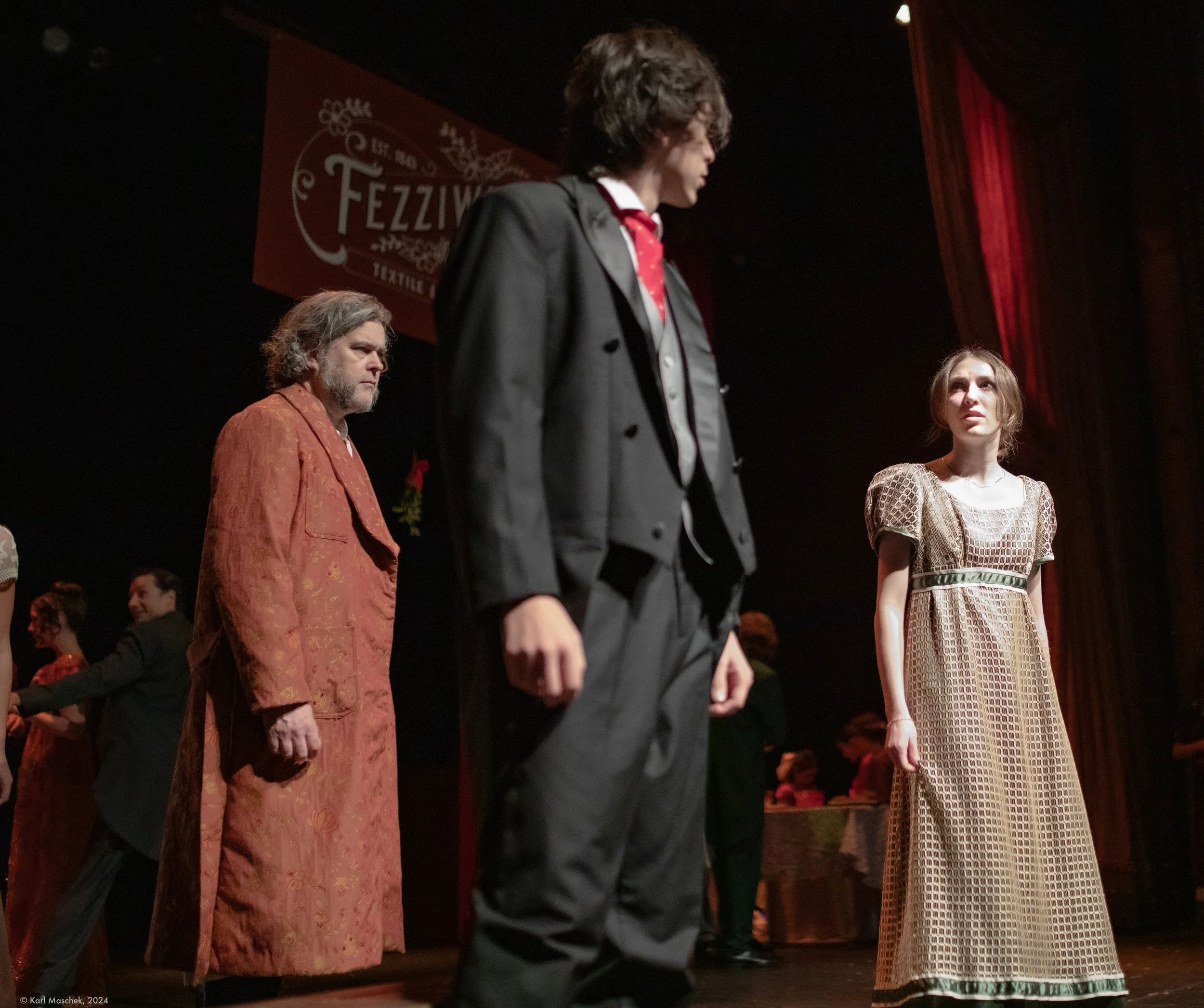
Later in life, after having enjoyed a taste of well-followed serials (including Oliver Twist), he ran into debt and was desperate to raise funds; Charles decided to write what he referred to as his “little Christmas Book.” A Christmas Carol was self-published on December 19, 1843, and in just one week he successfully sold every copy of the first run. Inspired to write about the impoverished and the decay of social awareness and charity, Dickens created what many would call the greatest ghost story of all-time.
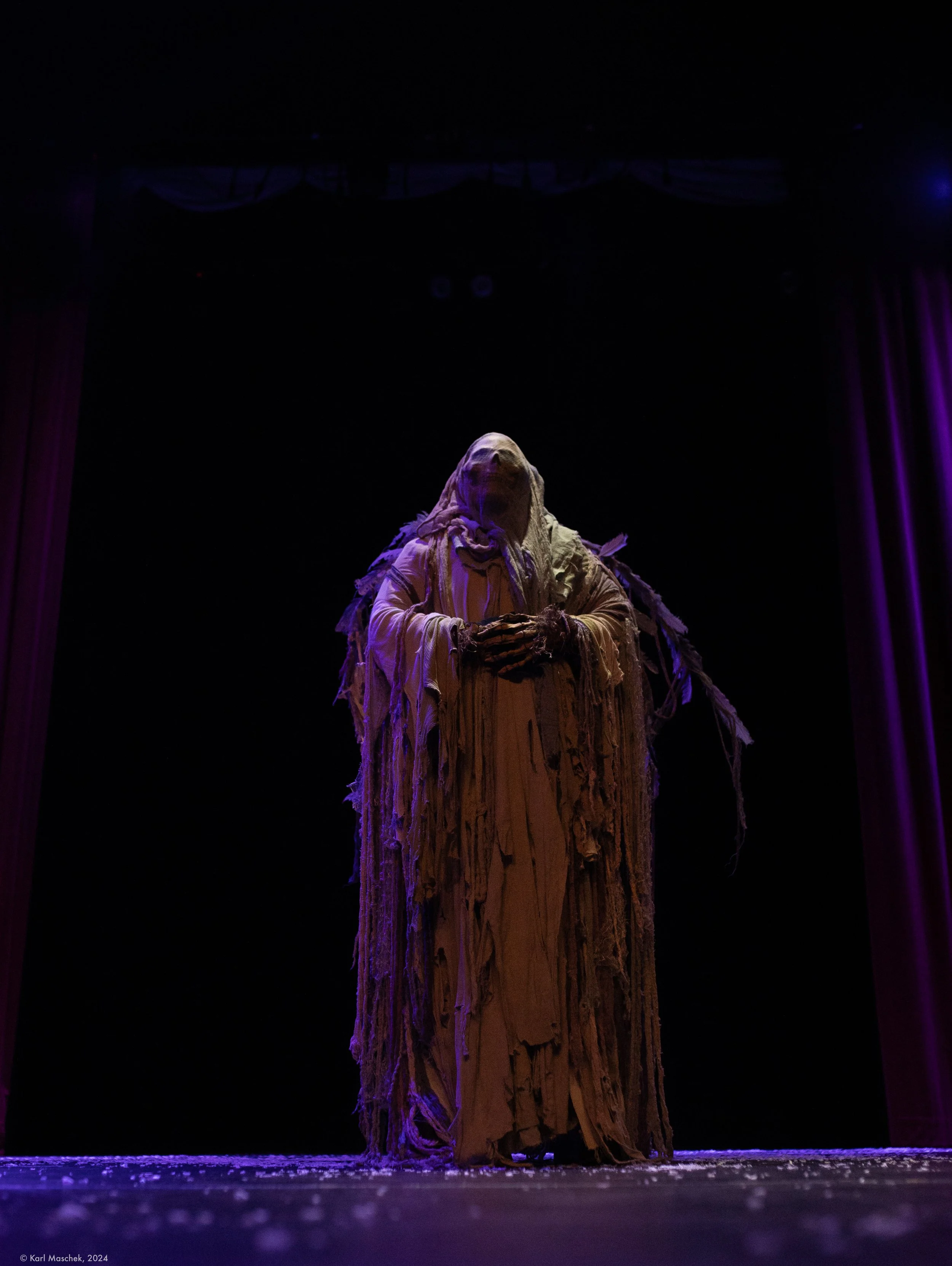
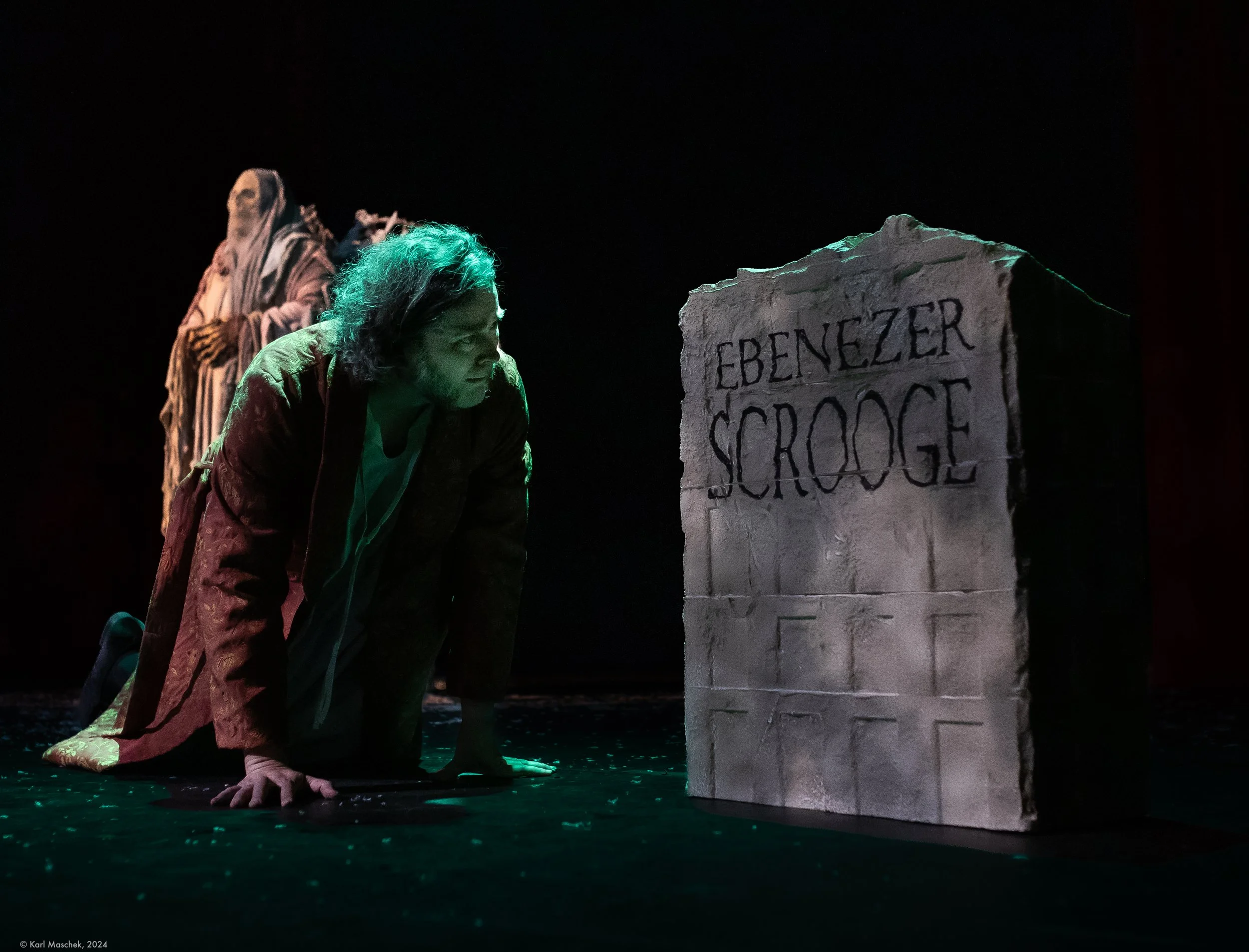
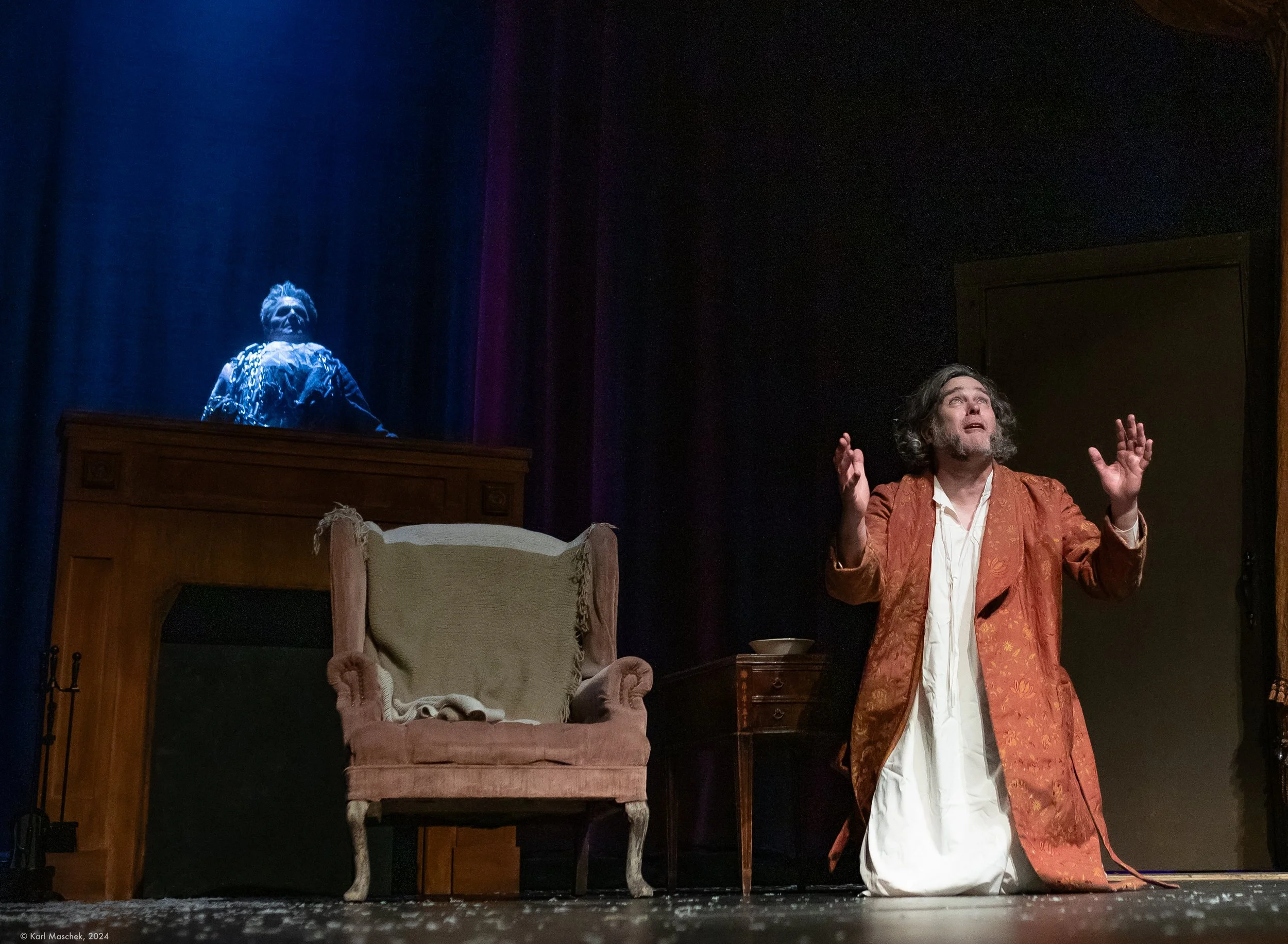
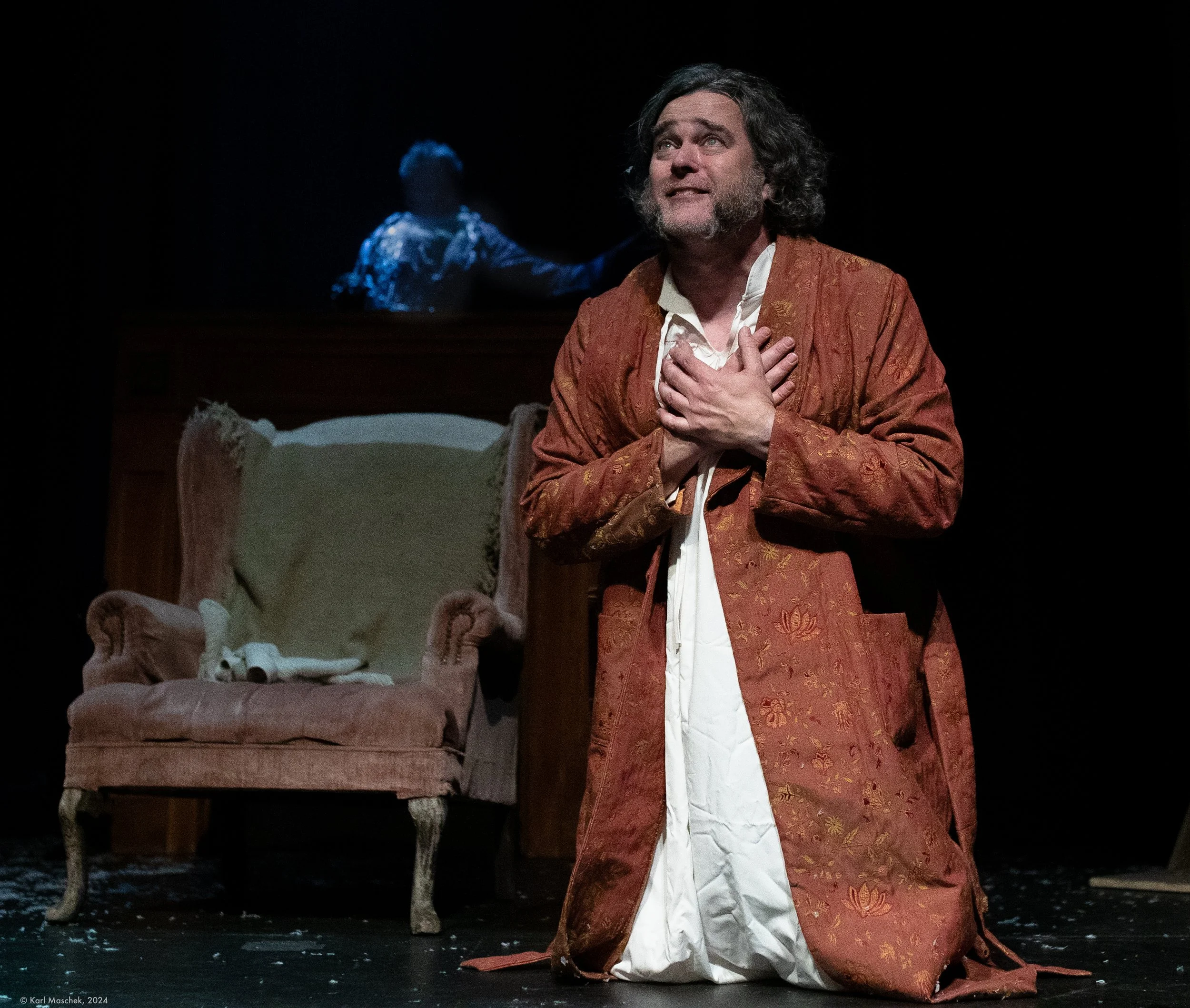
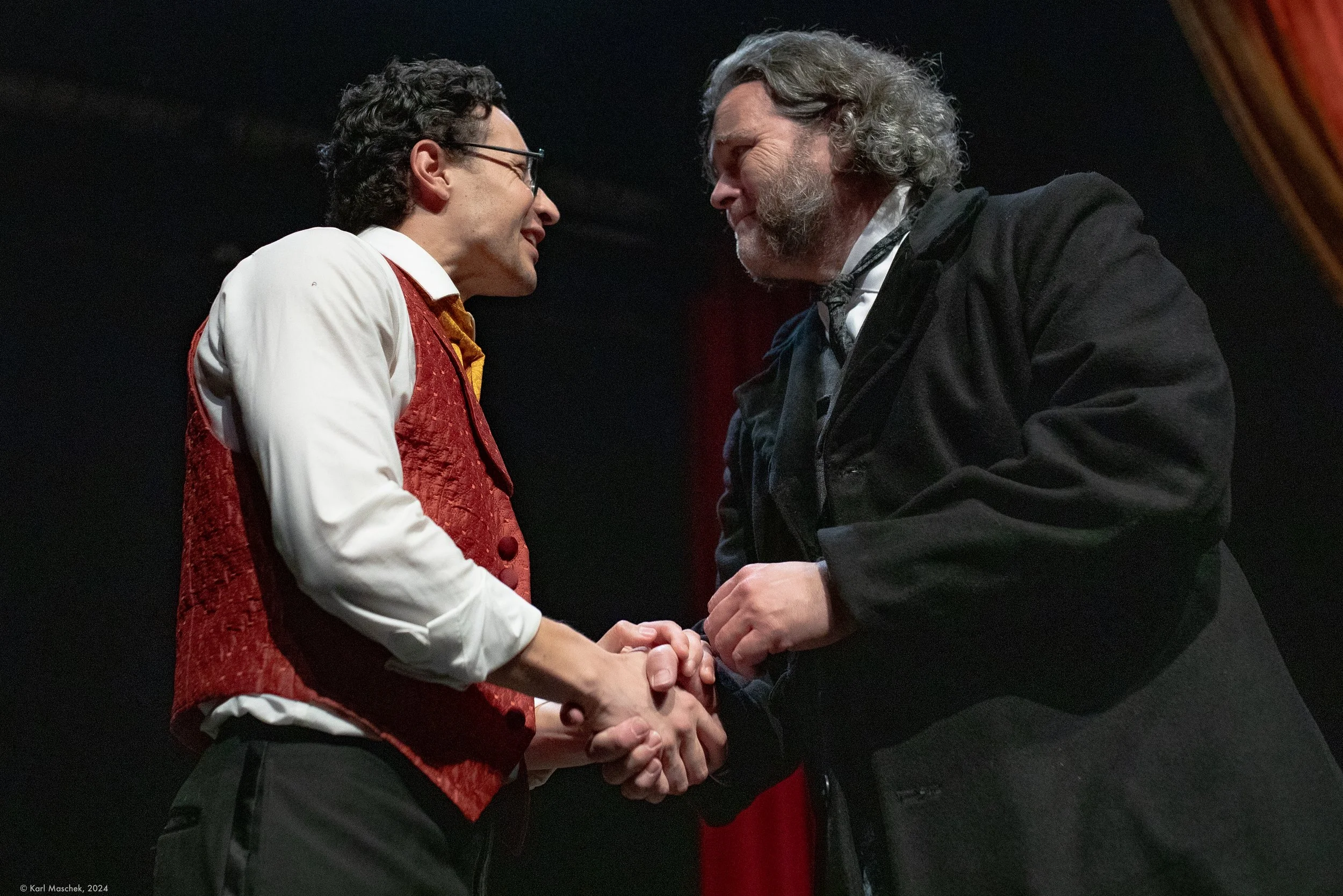
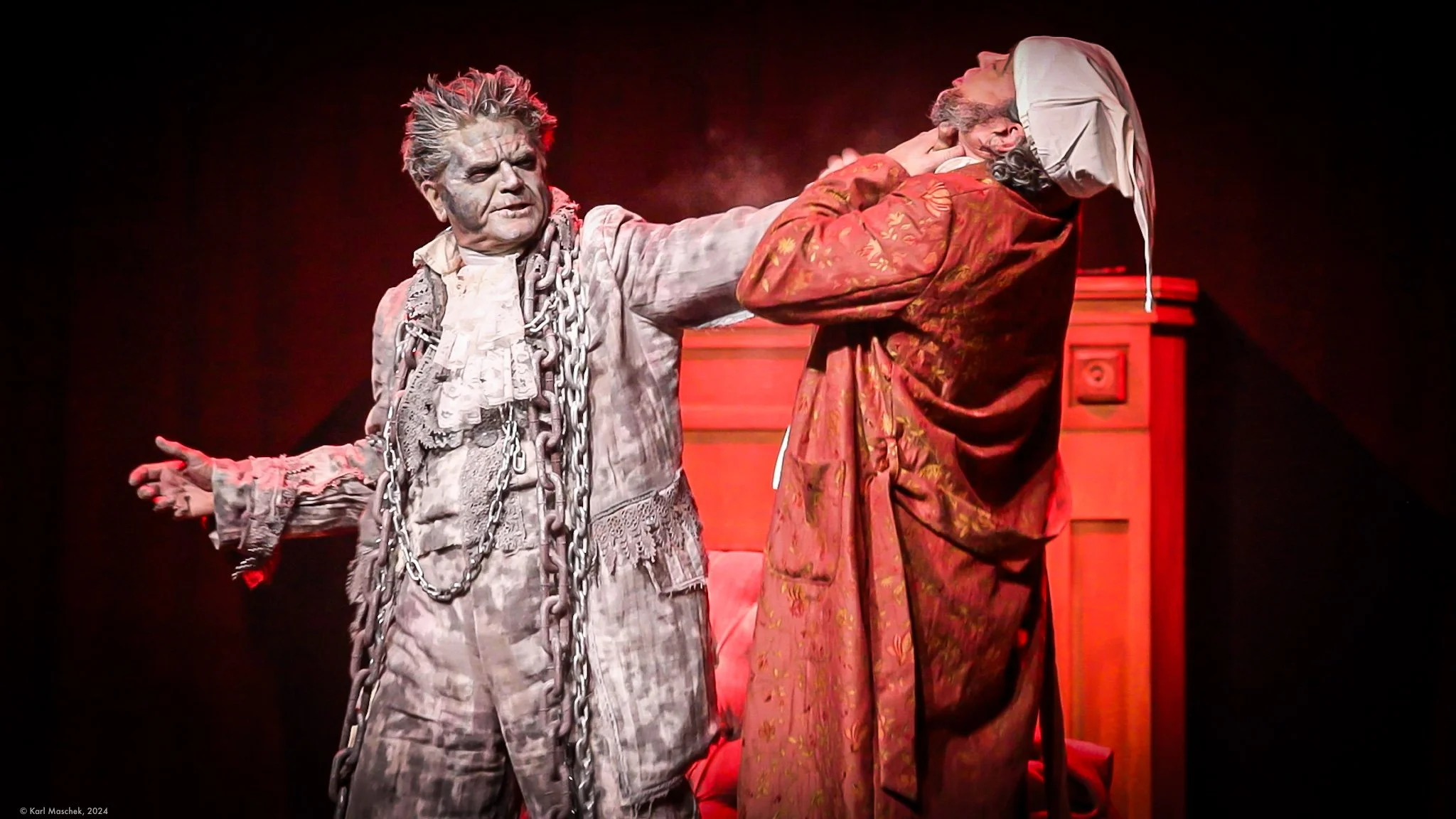
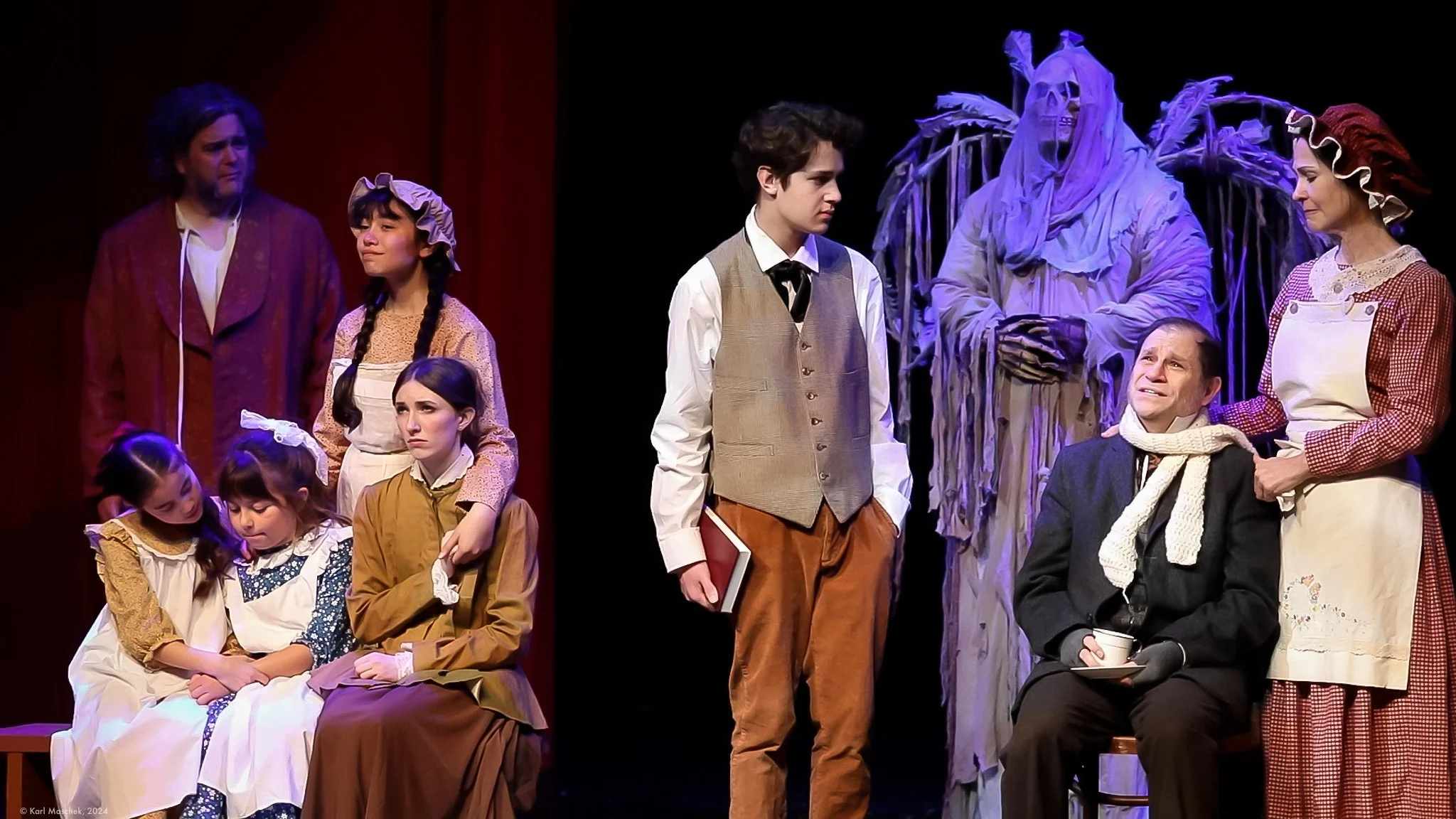
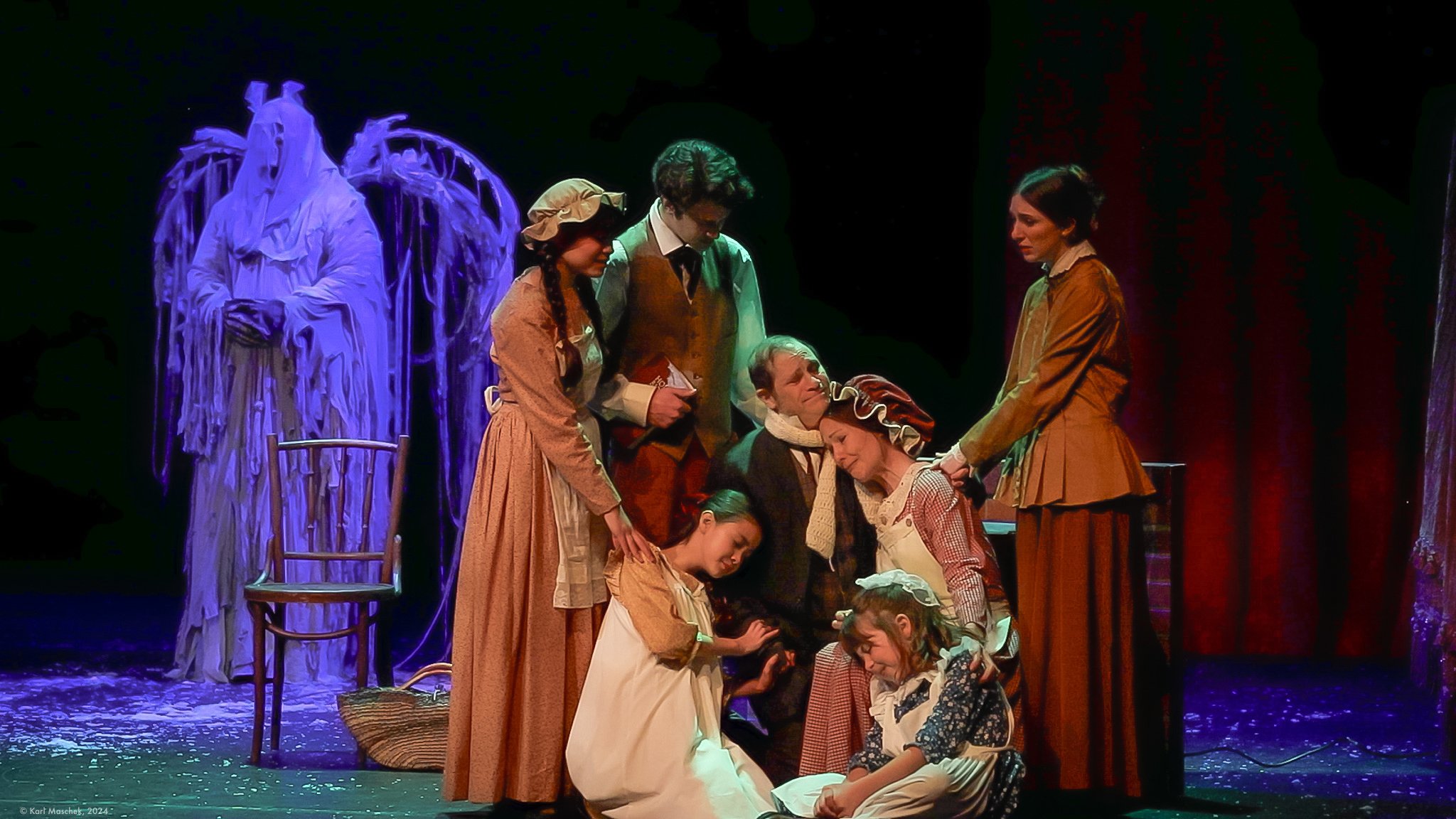
Dickens chose the vessel of a Christmas story to mask the horror of the times and the lack of compassion and ignorance that was infesting the country. I think you will find that our Carol is re-imagined, drawing focus to the overall intention and tone of the play.
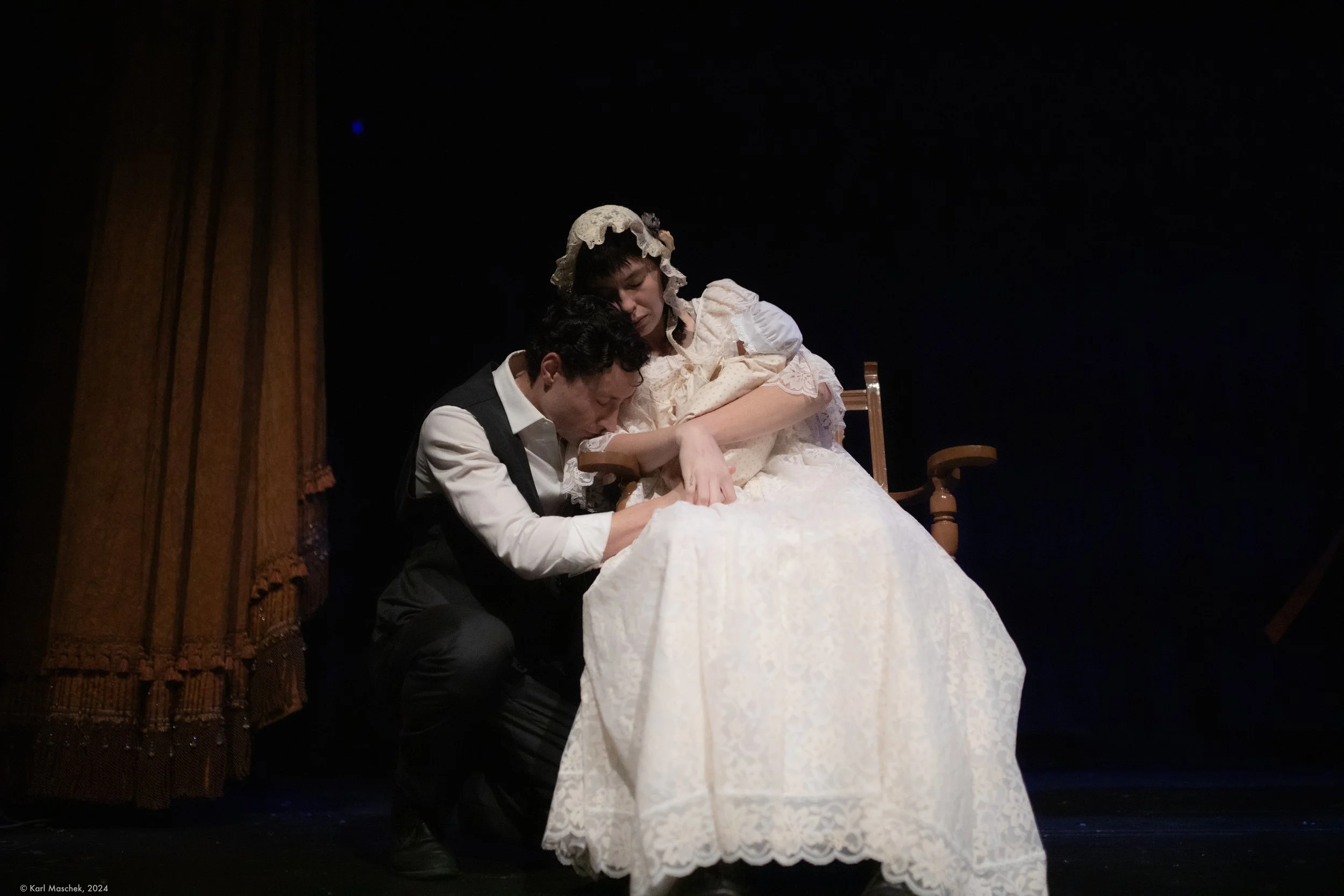
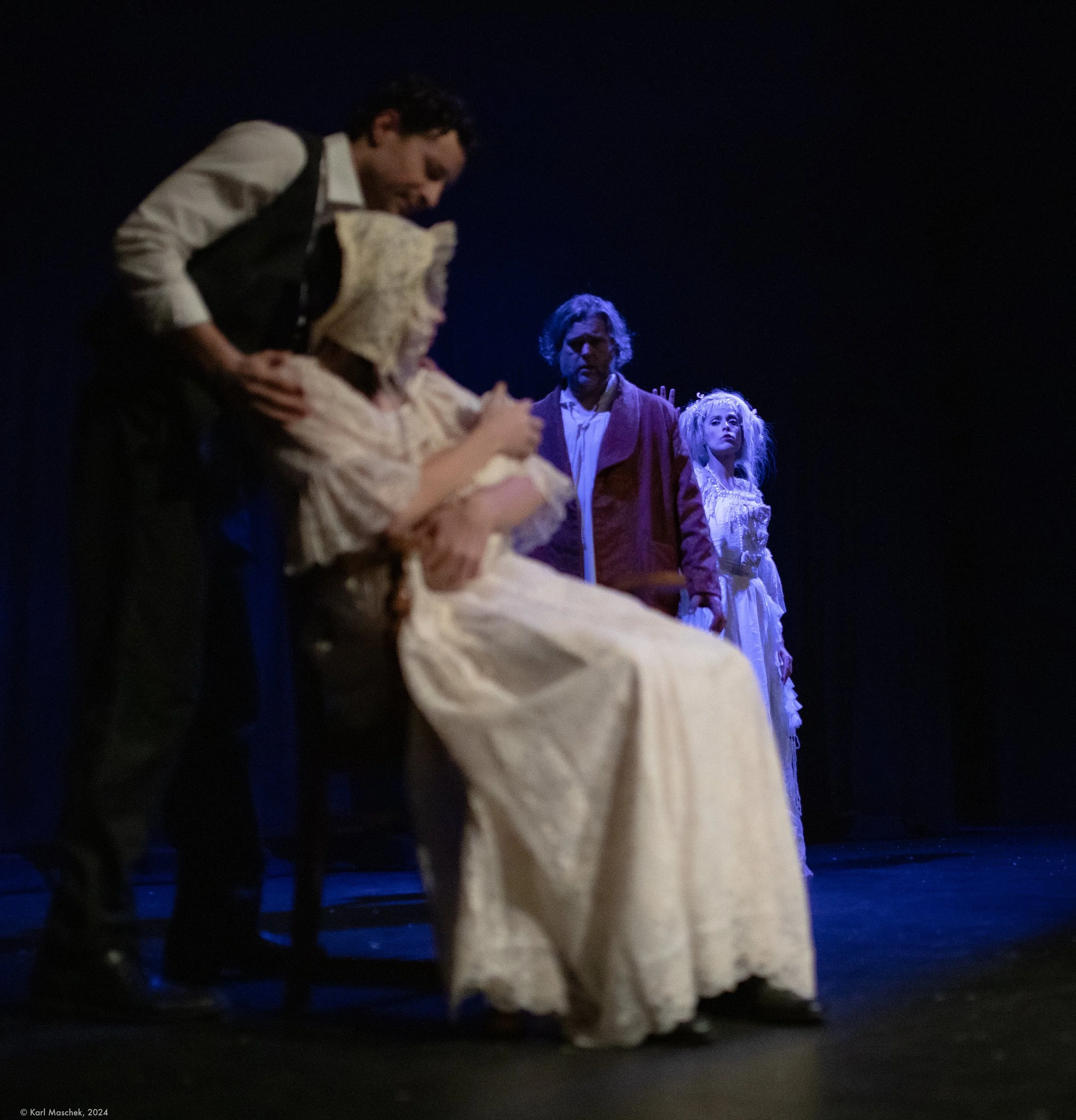
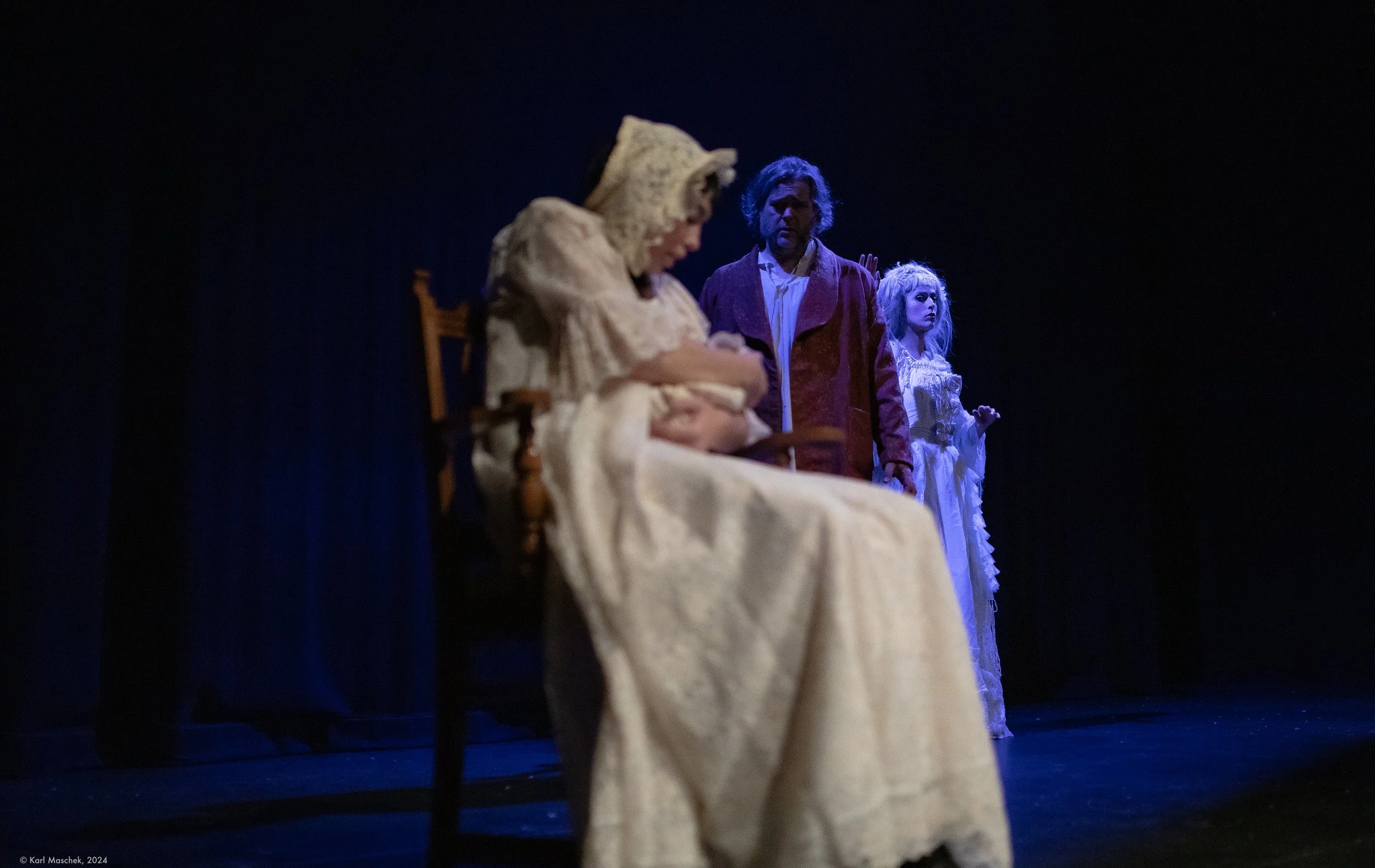
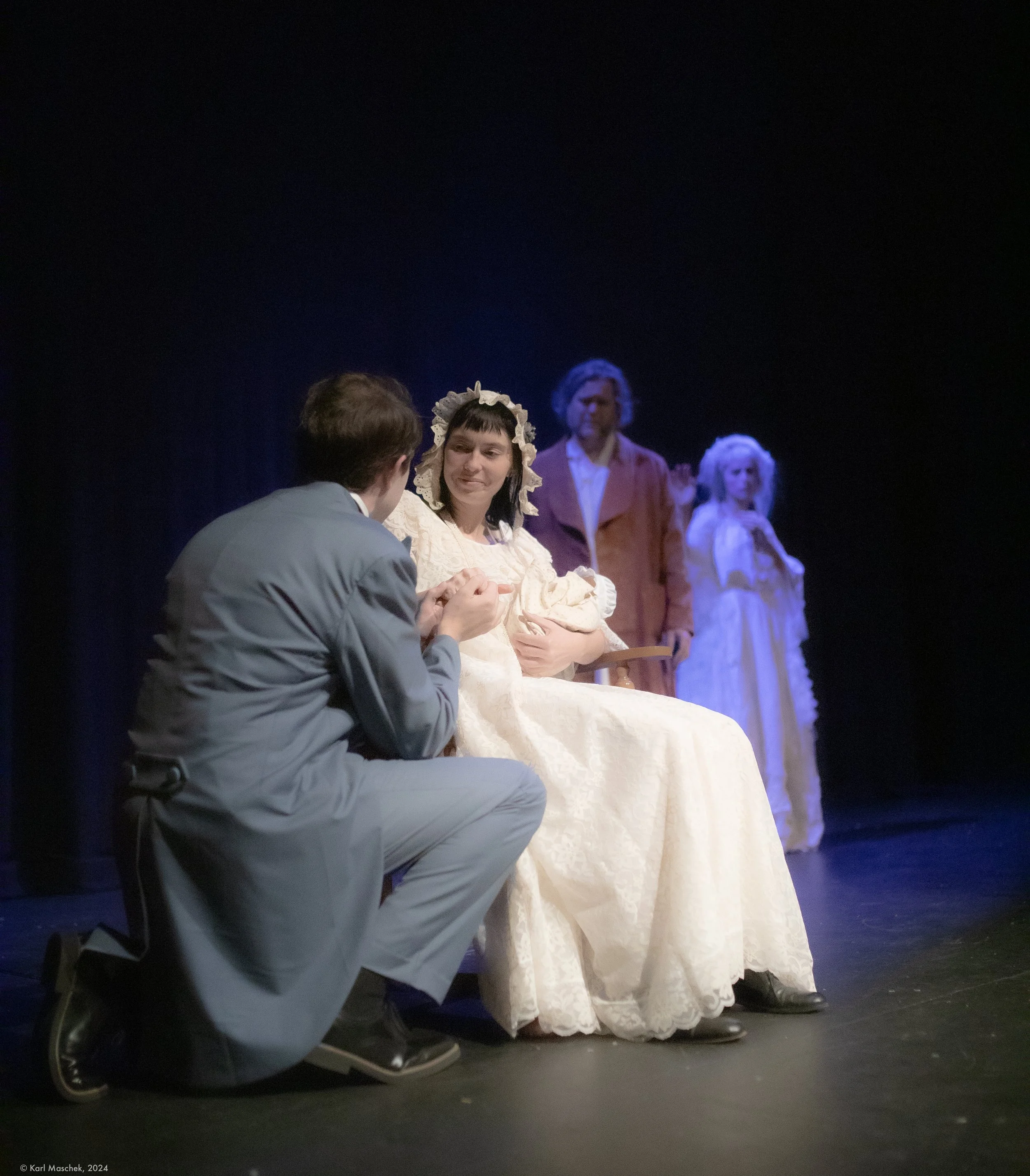
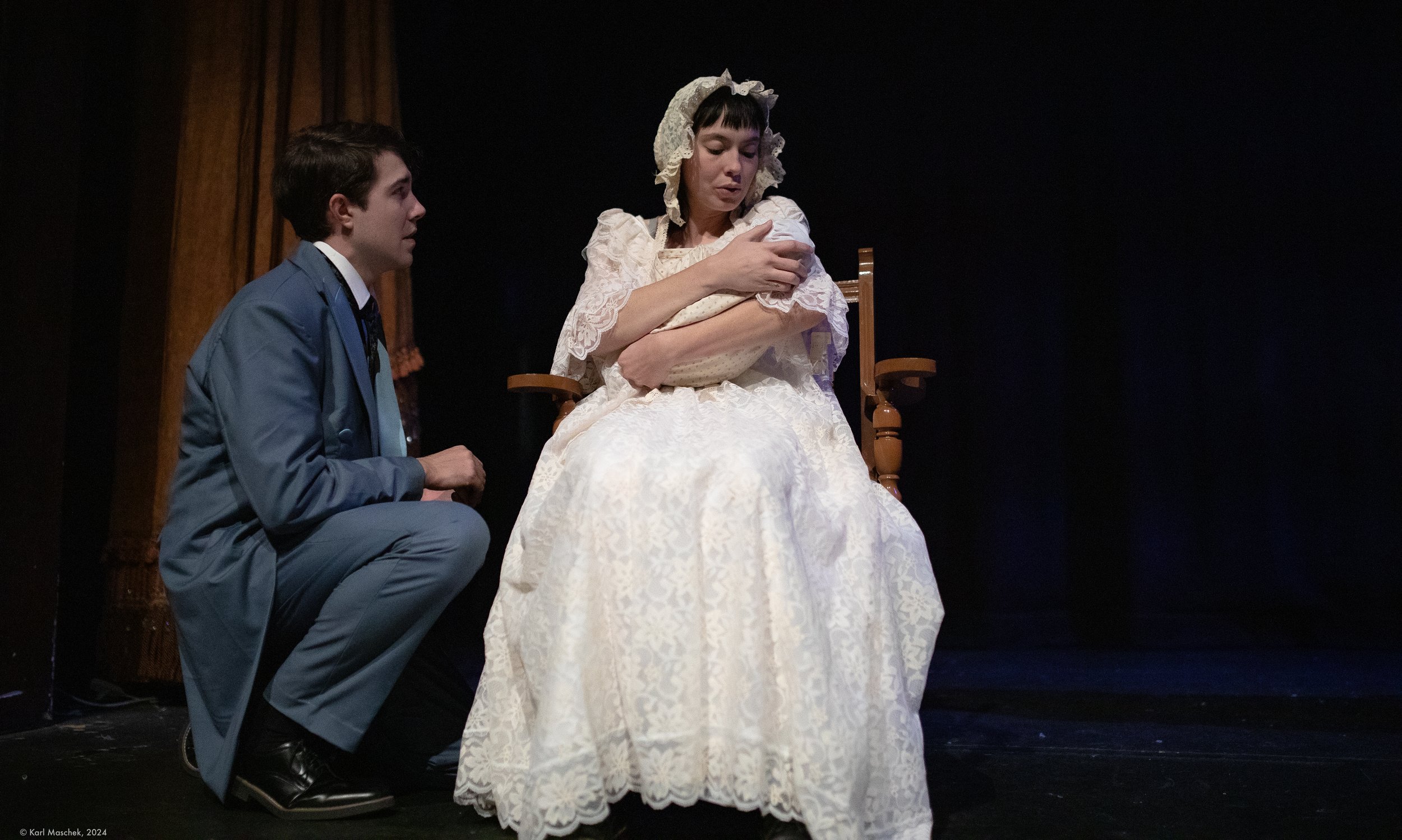
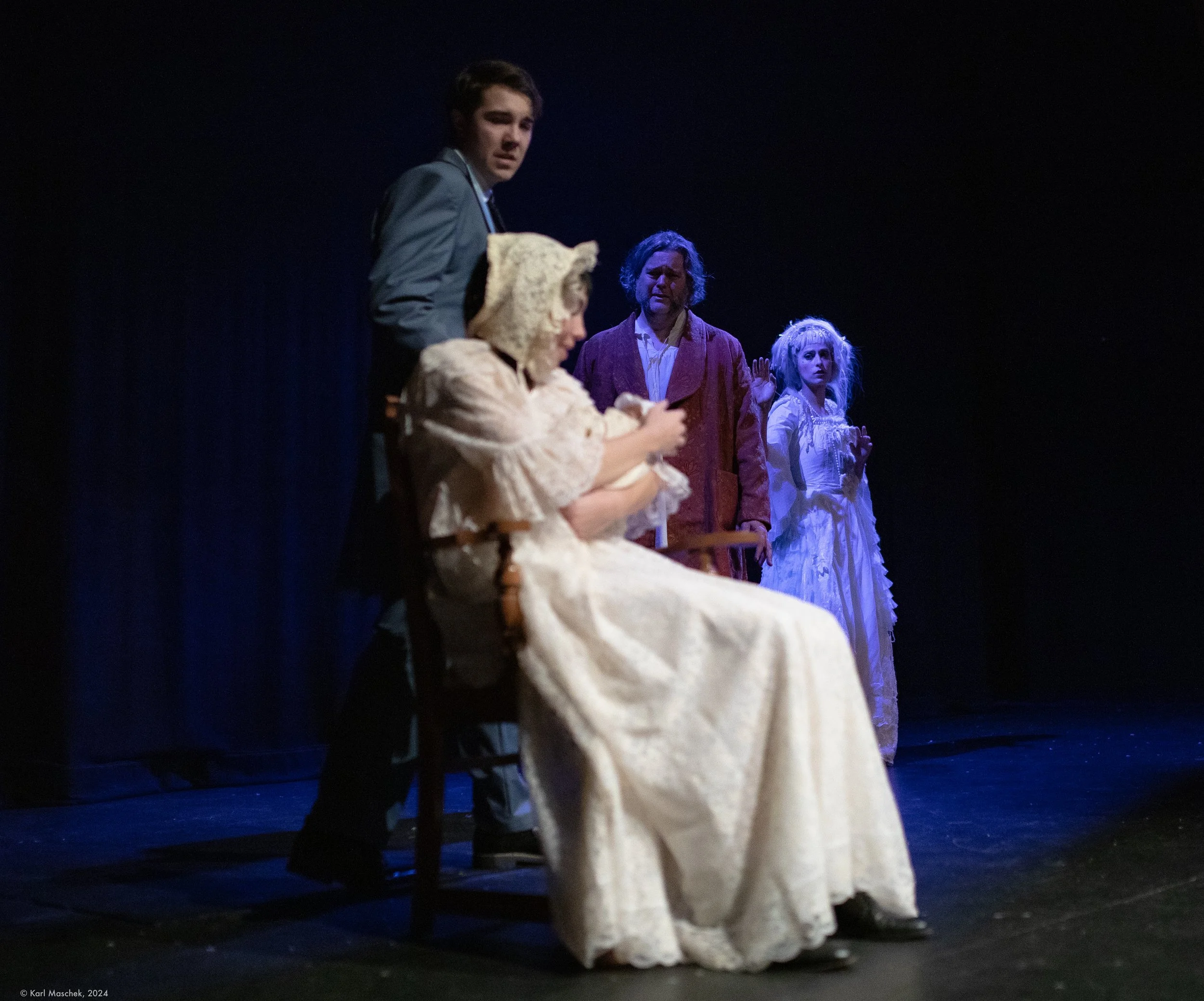
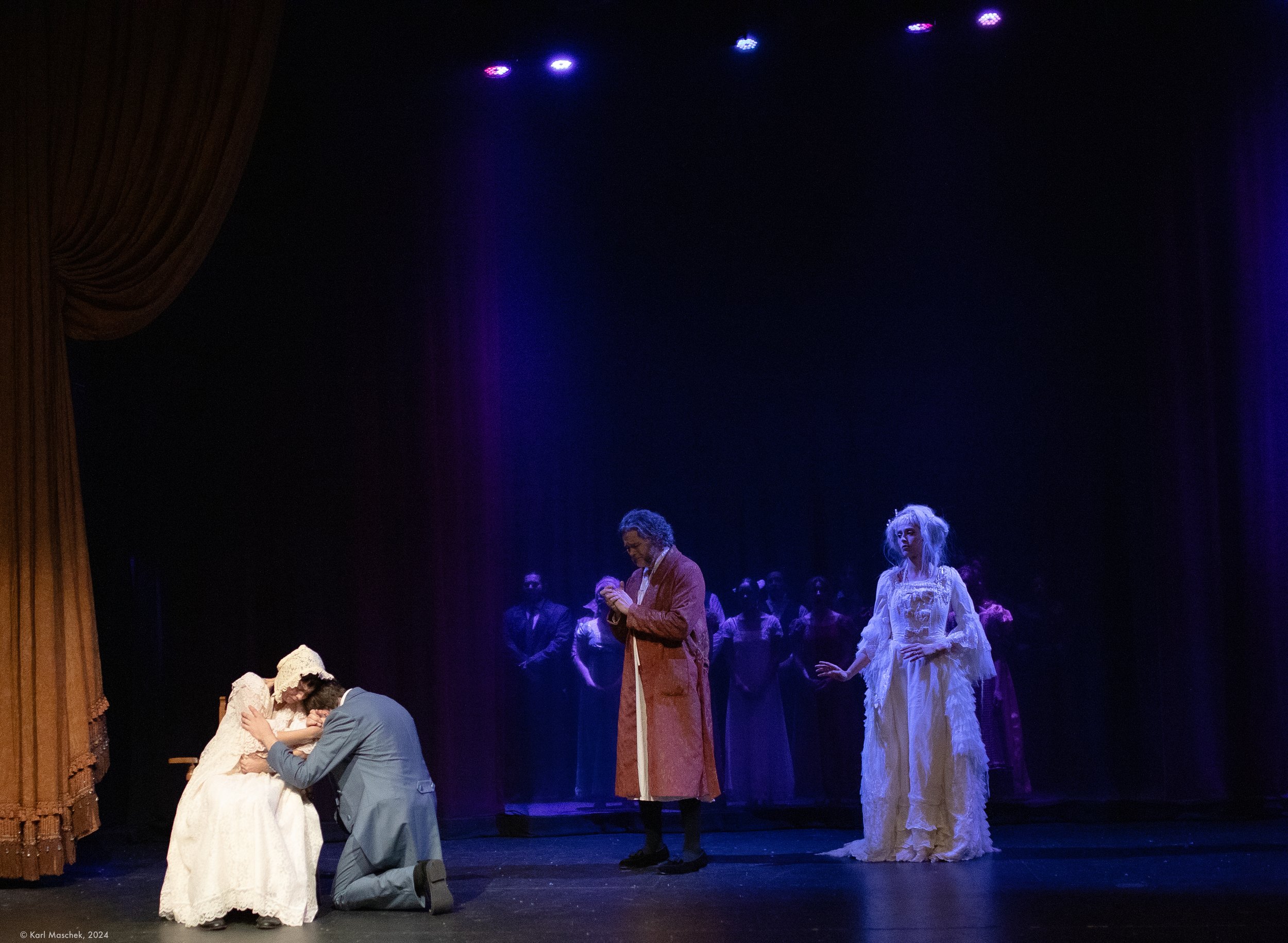
One of my primary goals in retelling such a beloved family classic was to uncover more of the path that led Scrooge to become one of the most infamous misanthropes in all of literature. Exploring Ebenezer’s past in greater depth, as we journey through his foggy memory, helps emphasize that the cruel and miserly Scrooge, we know so well, was not created overnight, but rather, it was the result of a series of events and tribulations; some caused by external forces and others self-imposed.
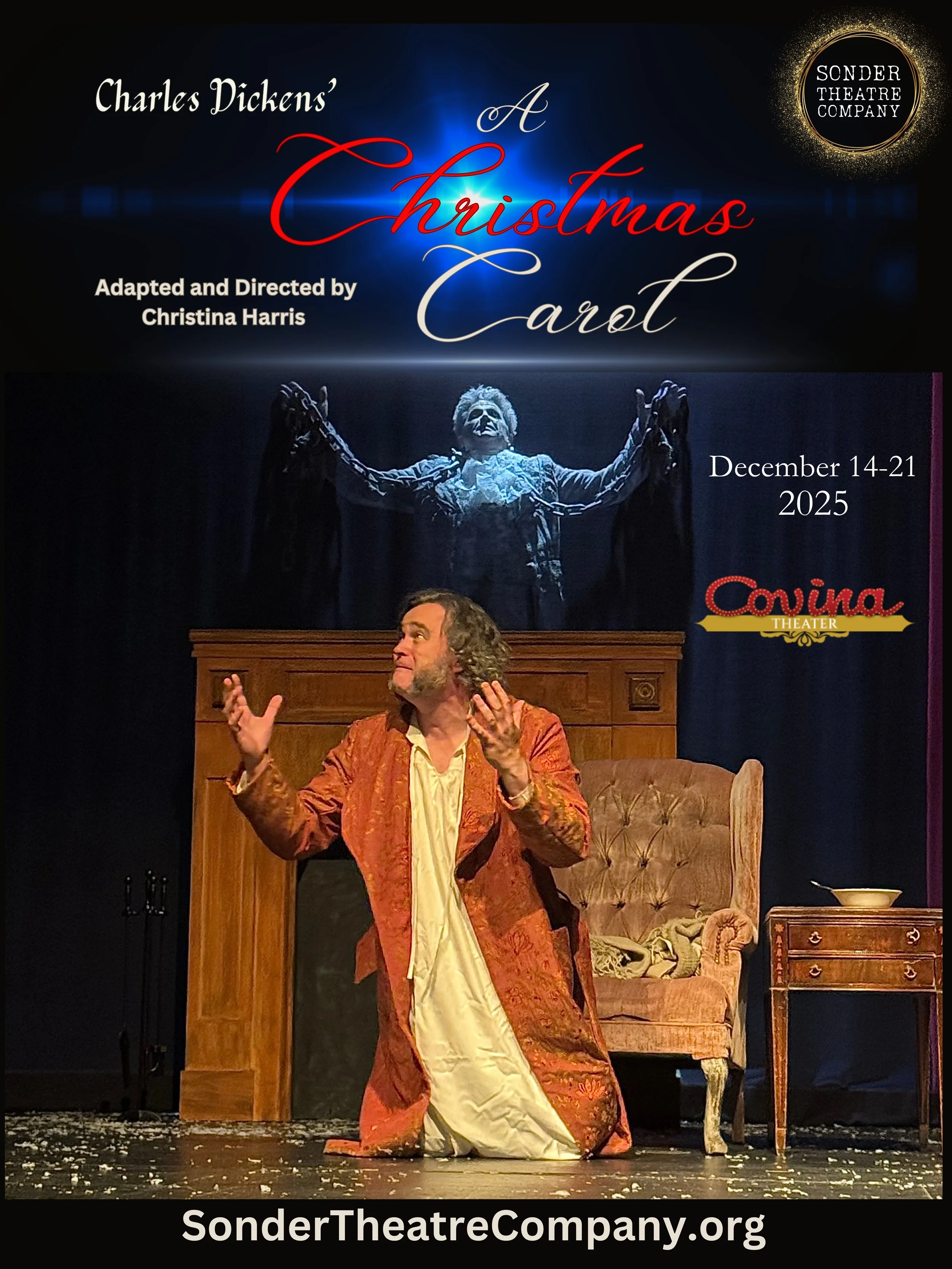
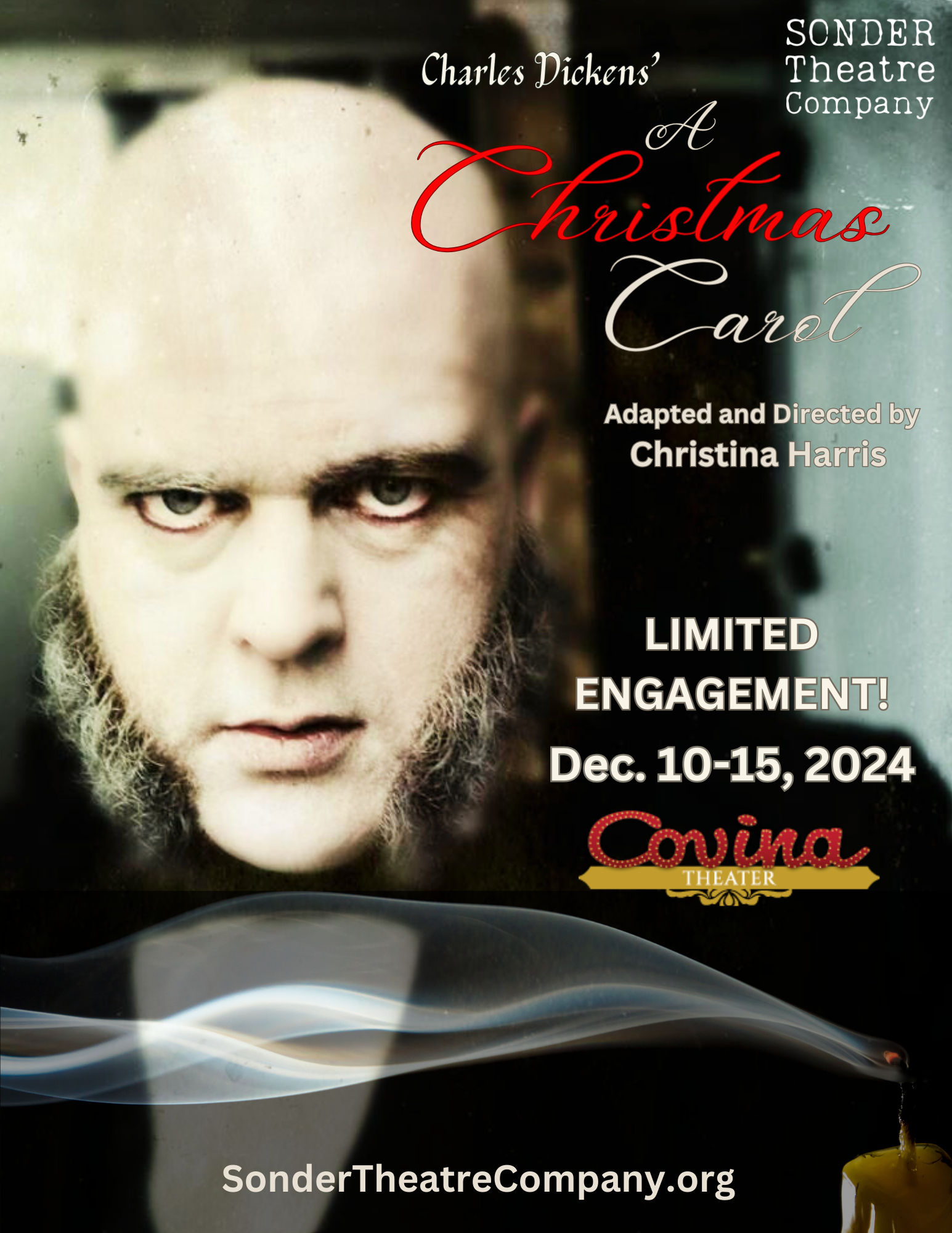
I have always been a Christmas person; holidays with family and loved ones top the list of my favorite things. So, being able to share my vision of A Christmas Carol is a dream made real. I do hope you join us for a truly transformative experience as we share our version of A Christmas Carol.
“Harris’ interpretation is deeper and more soul searching than any other version I have seen” - LA Drama Critics Circle
“Scott Harris’ emotional portrayal of Scrooge….Captivating and oft times, riveting.” - LA Weekly